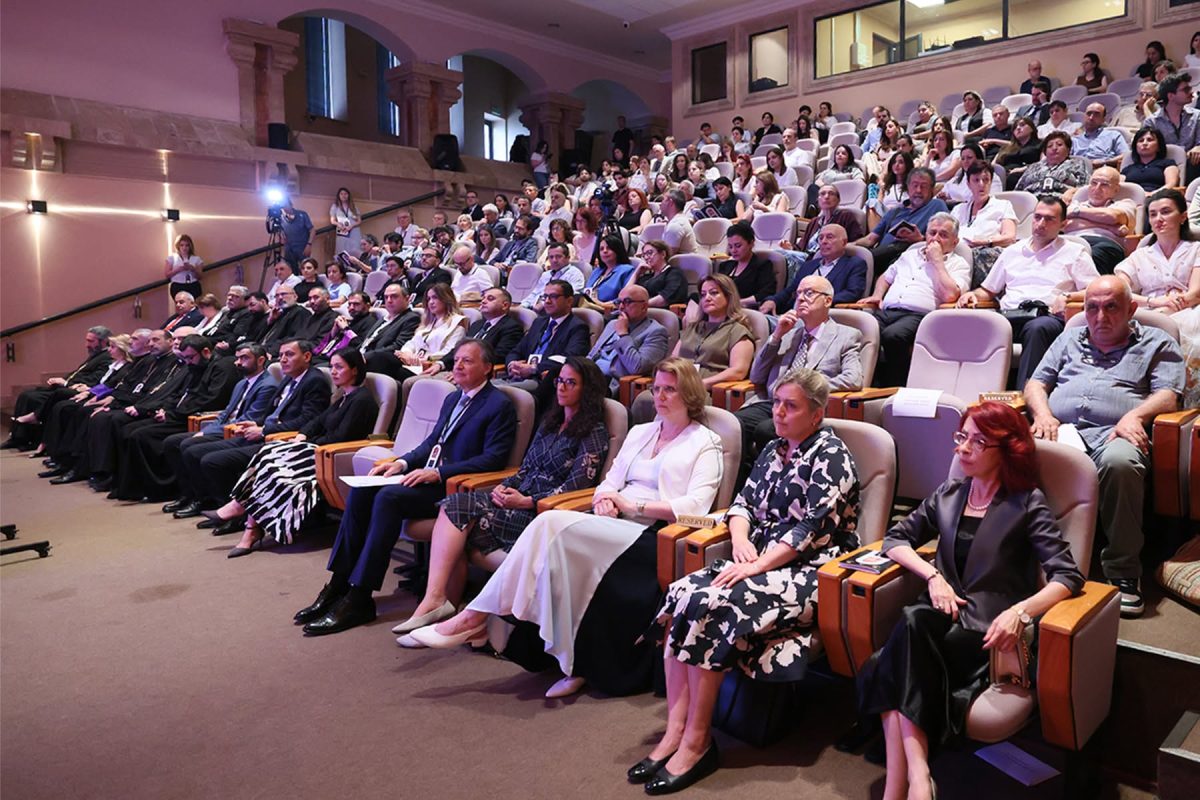



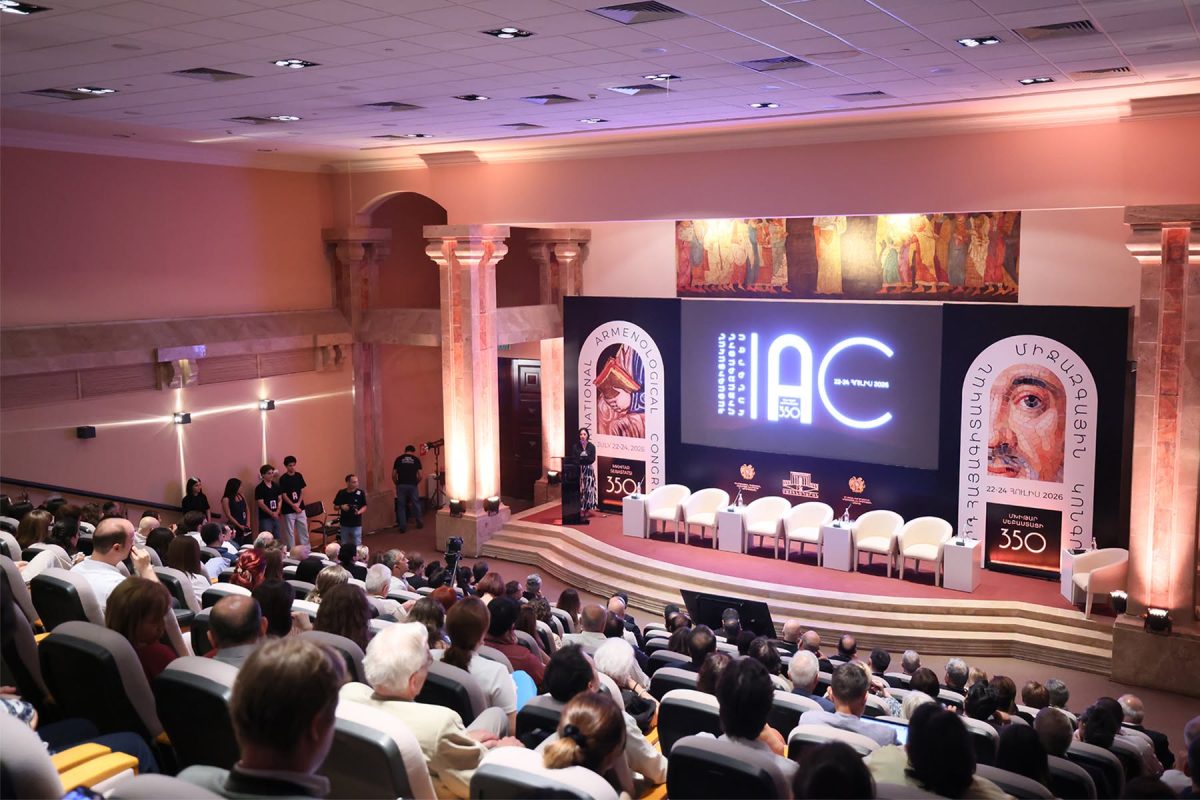
The 3rd International Congress of Armenian Studies opened at the Matenadaran on July 22, bringing together Armenologists from leading universities and research institutions in 16 countries. The three-day event, held with the support of Armenia’s Ministry of Education, Science, Culture and Sports, is dedicated to the 350th anniversary of the birth of Mkhitar Sebastatsi, the founder of the Mekhitarist Congregation.
The opening ceremony was attended by Minister of Education, Science, Culture and Sports Zhanna Andreasyan, Deputy Minister Artur Martirosyan, Chair of the Higher Education and Science Committee Sargis Hayotsyan, Matenadaran Director Ara Khzmalyan, and Italian Ambassador to Armenia Alessandro Ferranti.
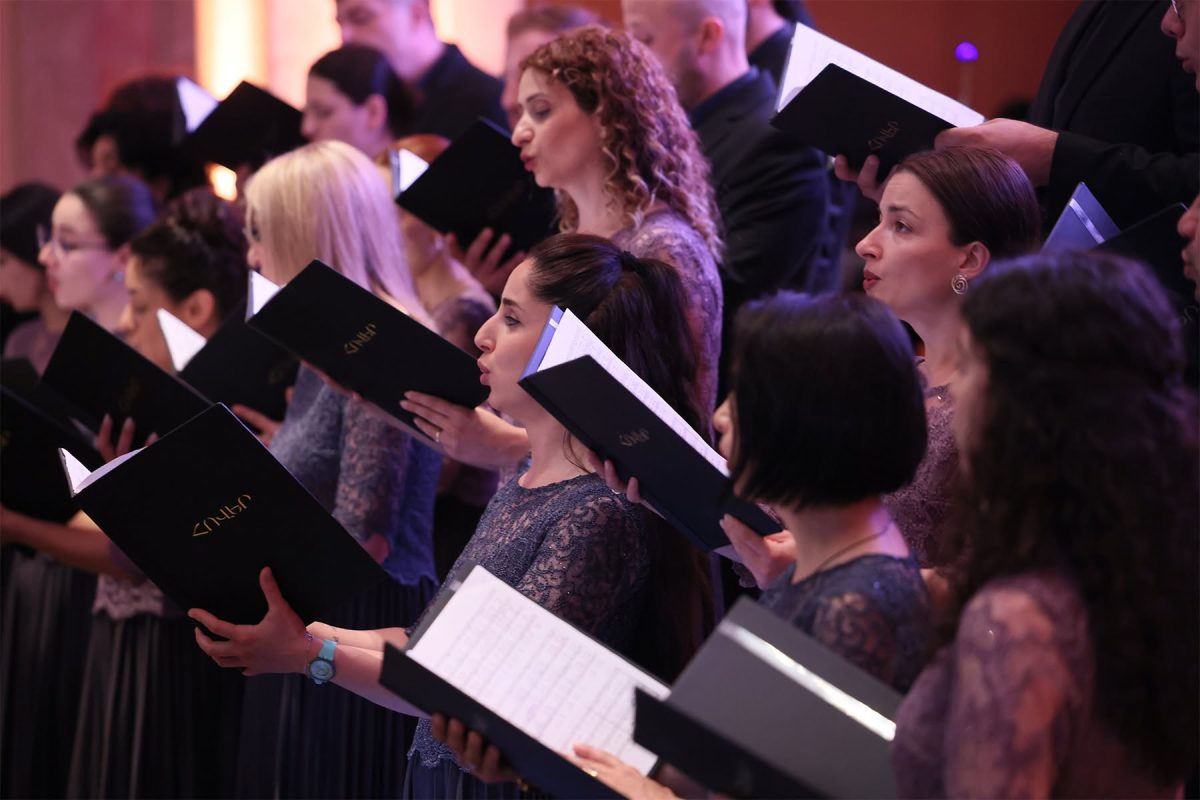
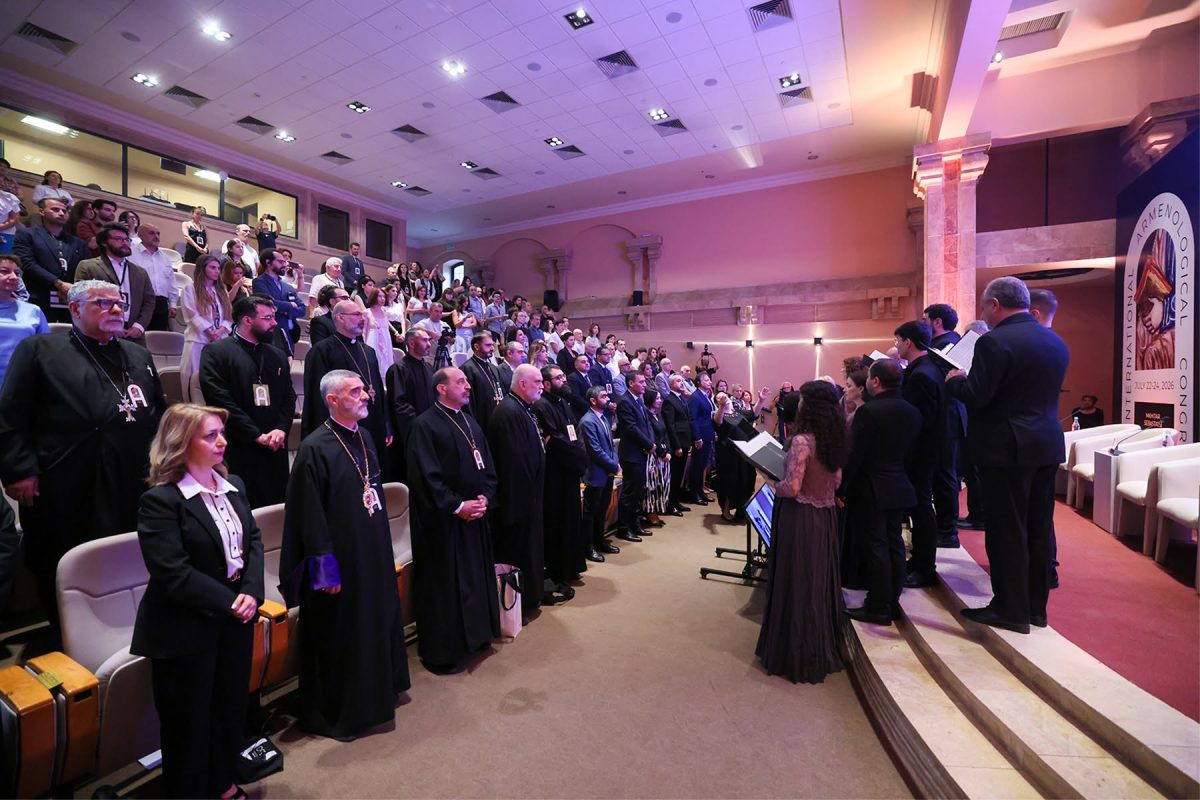
The congress opened with the performance of “Armenia,” a composition by Vache Sharafyan, performed by the Hover State Chamber Choir. The piece, presented to the Matenadaran as part of the congress, will accompany the institution’s official ceremonies going forward.
In her opening remarks, Minister Andreasyan highlighted the importance of institutional cooperation and scholarly dialogue in advancing Armenian studies, noting that the congress has evolved into an effective platform for addressing key issues in the field.
She recalled that discussions during the first congress drew attention to the preservation of the spiritual heritage of the Mekhitarist Congregation in Venice, leading to the inventory of Armenian manuscript centers and consideration of solutions for their preservation.
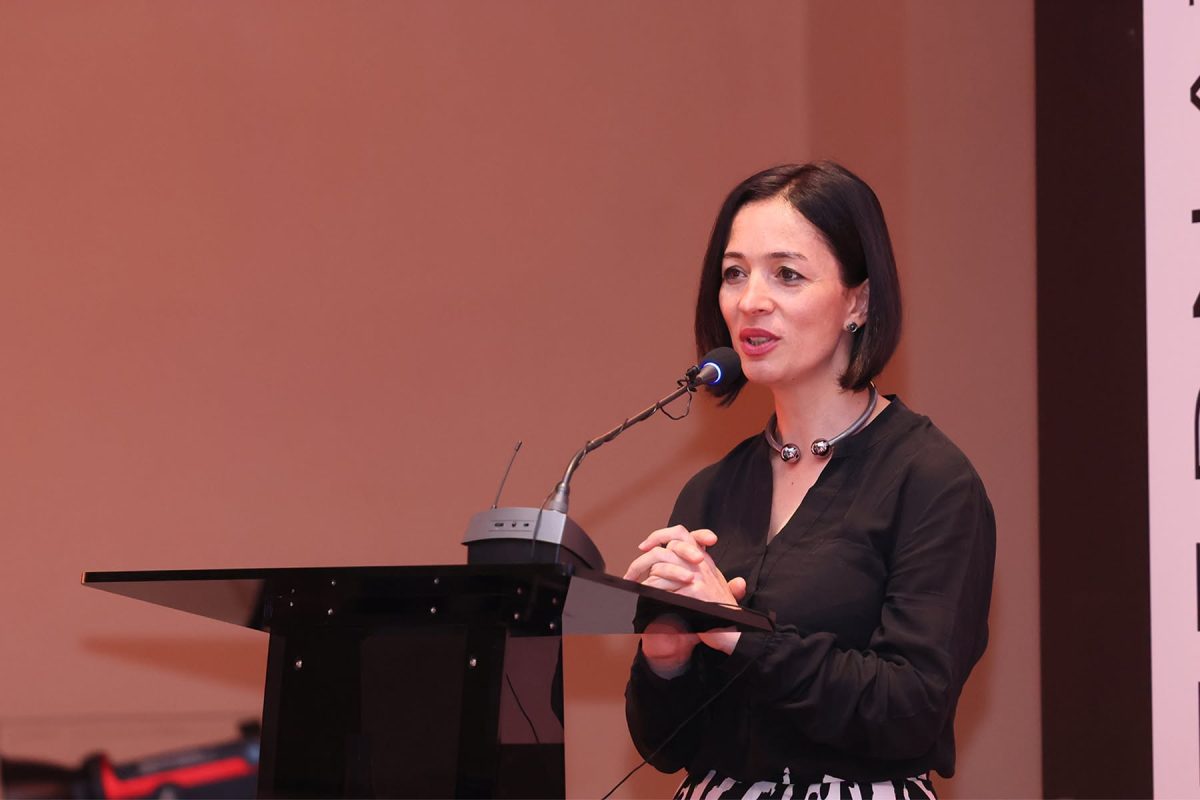
Andreasyan said the experience gained over the past three years has laid the groundwork for a more institutional approach to Armenian studies. She noted that Armenia’s new Law on Higher Education and Science, adopted last year, identifies the promotion of Armenian studies as a priority, while the national science development strategy approved in January also emphasizes the field.
“Armenian studies carry emotional and historical significance for us, but on this platform we must prioritize scientific approaches, placing internationally recognized research standards at the core of the discipline’s development,” she said.
The minister stressed that the issues raised during the congress should continue to be explored in universities and inspire young researchers, both in Armenia and at Armenian studies centers abroad. She also thanked the Matenadaran’s professional team, the European Union Delegation, the Embassy of Italy, and representatives of Armenian manuscript centers for their support.
“The community of Armenian studies scholars is expanding and developing, which is itself one of the congress’s achievements. I am pleased that we are advancing Armenian studies together,” Andreasyan said.
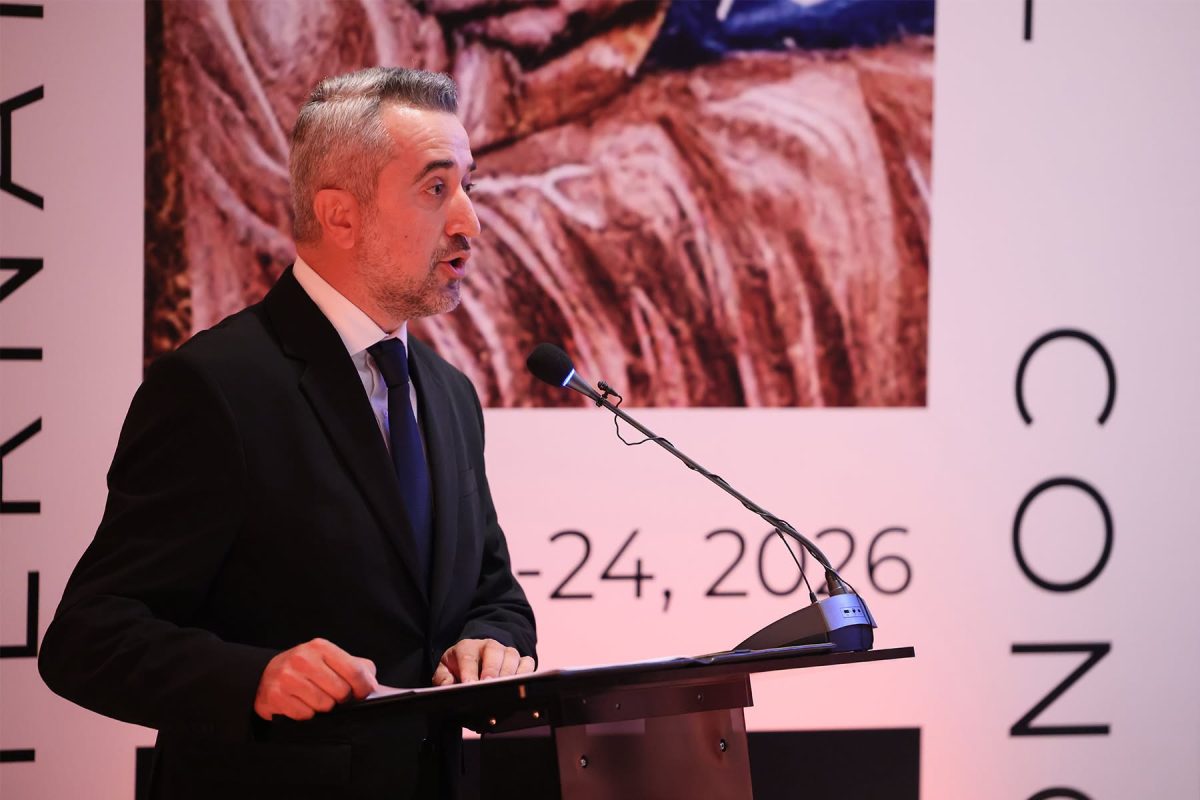
Matenadaran Director Ara Khzmalyan emphasized that dedicating this year’s congress to the 350th anniversary of Mkhitar Sebastatsi provides an opportunity not only to honor his legacy but also to assess efforts to preserve, study, and promote Armenia’s written heritage.
“A jubilee is not merely an occasion to commemorate the past, but also an opportunity for self-reflection,” Khzmalyan said, calling for a comprehensive national strategy for the preservation, restoration, and international promotion of Armenian manuscript collections through the joint efforts of state institutions, the private sector, the Church, and the scholarly community.
As part of the congress, the Matenadaran opened a special exhibition dedicated to the 350th anniversary of Mkhitar Sebastatsi at its research building. The museum will also host an exhibition titled “The Eternity of One Year: Manuscript Acquisitions of the Matenadaran,” alongside a book fair showcasing new publications in Armenian studies and the institution’s latest editions.
The 350th anniversary of Mkhitar Sebastatsi is included in the Ministry of Education, Science, Culture and Sports’ official list of commemorative events for 2026.