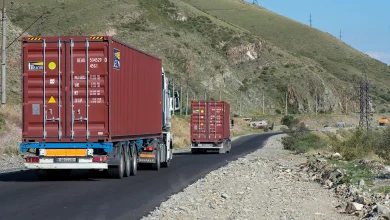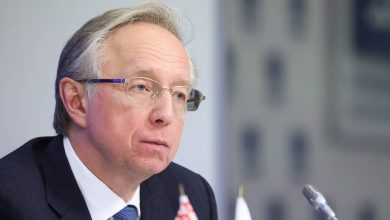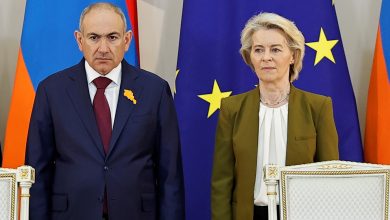



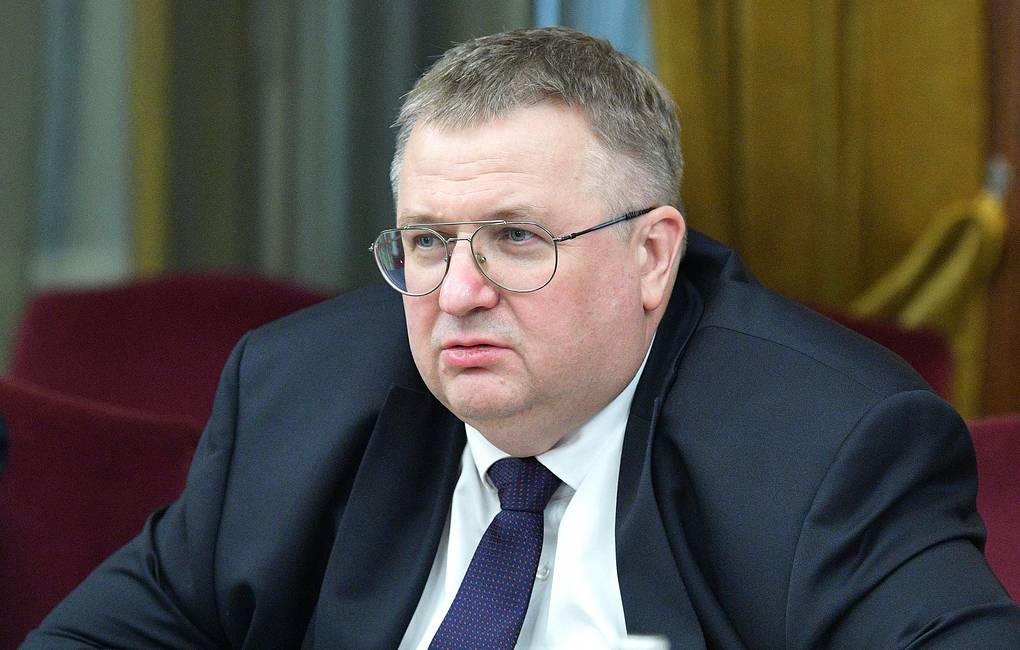
A new chapter in South Caucasus cooperation has begun with the opening of a direct railway connection between Russia and Armenia via the territories of Azerbaijan and Georgia — the first such route since Armenia’s independence, Russian Deputy Prime Minister Aleksei Overchuk told reporters.
Speaking to journalists, Overchuk said the start of rail freight traffic between the Russian Federation and the Republic of Armenia through Azerbaijani and Georgian territory “represents a real, concrete contribution to the establishment of peace in the South Caucasus.”
The first cargo delivered along the route was a shipment of Russian wheat, which Overchuk described as “a symbolic and meaningful first load — a product that represents life and creation.” He noted that the choice of cargo underscores the shared commitment of regional countries to move “from confrontation to cooperation.”
According to the deputy prime minister, the new railway link strengthens Russia’s transport connectivity with the South Caucasus, facilitates access to Armenian markets for goods from other member states of the Eurasian Economic Union (EAEU), and improves Armenian exporters’ access to markets across the bloc.
Overchuk emphasized that the reopening of the route was made possible through the agreements reached by the leaders of Russia, Armenia, and Azerbaijan in 2020 and 2021, following the Second Karabakh War. The project, he said, is the result of the work of the trilateral working group chaired by the deputy prime ministers of the three countries.
“I would like to thank my colleagues — Deputy Prime Minister of the Republic of Azerbaijan Shahin Mustafayev and Deputy Prime Minister of the Republic of Armenia Mher Grigoryan — for their joint efforts to unblock transport communications in the South Caucasus, as well as Georgia for its constructive participation in organizing shipments along this route,” Overchuk added.
The resumption of this route marks a significant moment in the region’s post-conflict development, enhancing economic integration and signaling a potential shift toward long-term stability and cooperation in the South Caucasus.