



The Office of the Prime Minister of Armenia has responded to recent remarks by Azerbaijani President Ilham Aliyev, who reiterated demands regarding the so-called “Zangezur corridor” and issued new statements about the Armenia-Azerbaijan peace process. Prime Minister Nikol Pashinyan’s spokesperson, Nazeli Baghdasaryan, provided detailed comments in response to a query by Armenpress.
Armenia rejects “Zangezur Corridor” narrative
Addressing President Aliyev’s statement that Azerbaijani goods and citizens should not be subjected to Armenian border or customs control on a potential transit route through Armenia, Baghdasaryan stated that Armenia has never discussed, is not discussing, and will not discuss such terminology or its underlying logic.
She emphasized that Armenia is promoting the Crossroads of Peace project and expects the unblocking of regional transport routes through mutual respect for the territorial integrity, sovereignty, and jurisdiction of all involved countries, including reciprocal arrangements.
“The Azerbaijani President’s assertion that their citizens will not encounter Armenian border services contradicts the logic of negotiations and represents a concealed territorial claim against Armenia, which is unacceptable,” Baghdasaryan said.
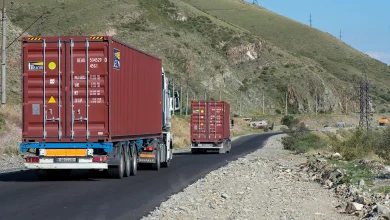
She underlined that all transit through Armenian territory, including goods and passengers, is subject to internationally recognized customs and border control procedures. “Armenia must know who is entering and leaving its territory and what goods are being transported,” she noted, adding that a failure to do so could open the door to smuggling and trafficking.
Baghdasaryan also pointed out that modern, contactless technologies, such as biometric passports and online goods declarations, can be utilized to streamline border procedures while still ensuring national security and compliance.
On transit fees and security
Baghdasaryan explained that international transit is accompanied by fees, varying depending on the mode of transport, and these fees will be collected by the Armenian state budget.
In terms of security, Armenia is prepared to independently ensure the safety of goods, vehicles, and passengers passing through its territory. The Crossroads of Peace initiative also includes plans to establish a special division within Armenia’s National Security Service dedicated to safeguarding these routes.
Regarding infrastructure investments, Baghdasaryan stressed that all investment projects within Armenia must fully respect the country’s territorial integrity and jurisdiction, reiterating PM Pashinyan’s position made during his July 16 press conference.
Railway construction and allegations of delay
Responding to Aliyev’s claims that Armenia has made no progress on railway construction, Baghdasaryan clarified that Armenia has proposed specific solutions, including offering to allow Armenian-operated trains to transport goods between Azerbaijan’s western regions and Nakhchivan via Armenian territory.
“These proposals have either been ignored or rejected by Azerbaijan,” she said, reaffirming Armenia’s readiness to move forward if agreements are reached.
Baghdasaryan noted that Azerbaijan’s railway construction also has domestic purposes, while Armenia’s incentive to build a 42-kilometer railway segment in Syunik is conditional upon reaching an agreement. Preparatory work, such as road construction in Nrnadzor, is already underway.
Peace agreement and constitutional amendments
On the peace treaty, Baghdasaryan confirmed that Armenia also believes the sides are close to signing an agreement. She said that the dissolution of the OSCE Minsk Group format and initialing of the agreement are topics being actively discussed.
In response to Aliyev’s demand for constitutional changes in Armenia as a precondition for signing the treaty, Baghdasaryan emphasized that this is a domestic issue. She reminded that Armenia’s Constitutional Court ruled in September 2024 that the Constitution does not contain any territorial claims against other countries.
She reminded that Prime Minister Pashinyan has stated that he would initiate constitutional changes only if the peace treaty is signed and found to contradict the Constitution. Discussions about a new Constitution have been ongoing since 2018 and continue as an internal Armenian political process.
Humanitarian issues in peace talks
Finally, Baghdasaryan stated that the issues of prisoners of war (POWs) and missing persons are an integral part of all discussions between Armenia and Azerbaijan, including in the context of the peace agreement.