


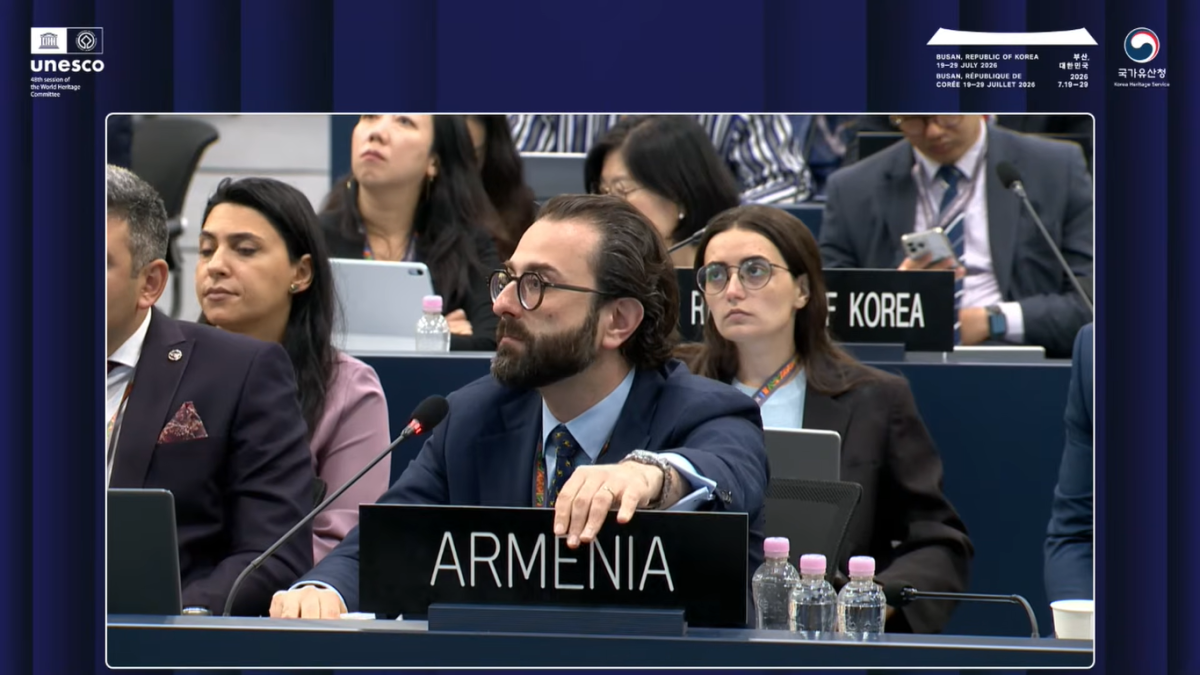
Armenia has secured the inclusion of the “Areni-1 Cave: Prehistoric Life and Winemaking in the Arpa River Valley” in UNESCO’s World Heritage Tentative List during the 48th session of the World Heritage Committee, currently taking place in Busan, the Republic of Korea, from July 19 to 29.
Armenia is participating in the session as a member of the World Heritage Committee for the first time. The Armenian delegation is headed by the country’s Permanent Representative to UNESCO, Aram Hakobyan, and includes Head of the Department for the Protection of Historical and Cultural Monuments at the Ministry of Education, Science, Culture and Sport Harutyun Vanyan, along with five national experts.
The newly registered nomination was prepared under a cooperation memorandum signed between the Ministry of Education, Science, Culture and Sport, the Areni-1 Cave Research Foundation, and the Armenian Enotourism Council NGO. The project was financed by the Armenian Enotourism Council, highlighting another successful example of public-private partnership in the preservation and promotion of Armenia’s cultural heritage.
With the inclusion of the Areni-1 Cave nomination, Armenia has doubled the number of sites on UNESCO’s World Heritage Tentative List over the past three years, adding four new entries to the four sites originally registered in 1995 as a result of sustained efforts.
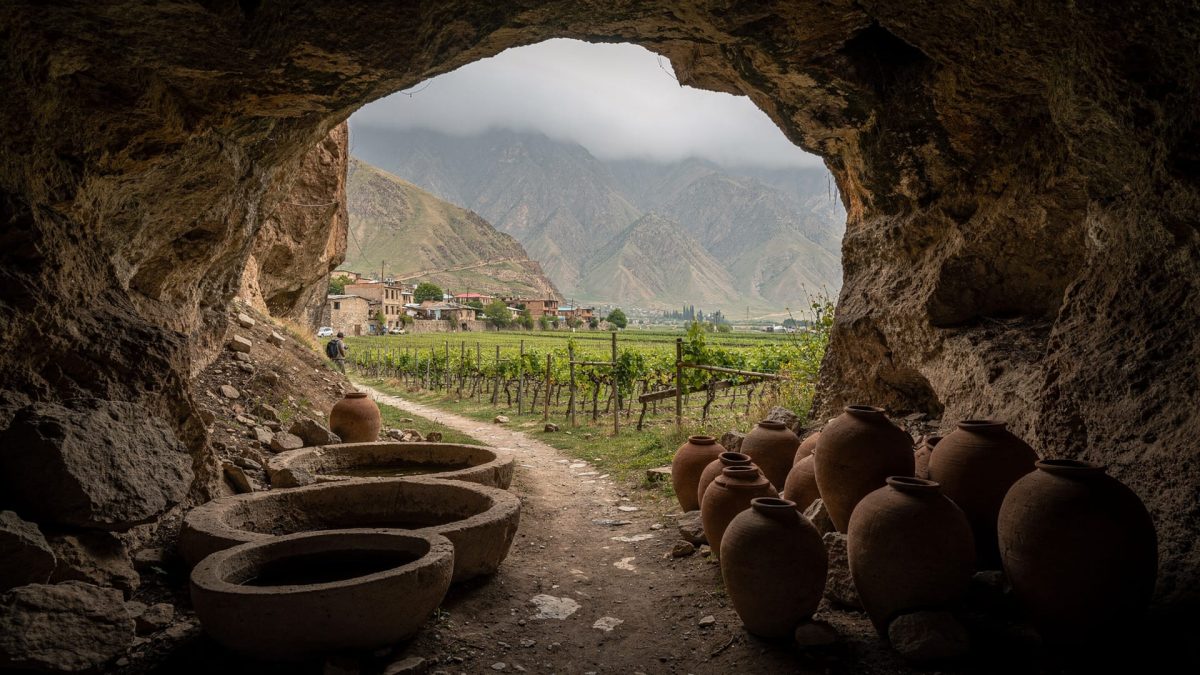
The Areni-1 Cave, locally known as the Birds’ Cave, is formed in the limestone cliffs of the Arpa River gorge, one of the most striking landscapes in southern Armenia. Situated at the natural crossroads between the Ararat Depression and the Syunik Uplands, the site overlooks fertile alluvial lands that have been cultivated for thousands of years with orchards and vineyards. The cave itself is a multi-chamber karst system. It includes:
- A steep talus slope leading down to the Arpa River.
- An external rockshelter once reinforced by cyclopean dry masonry.
- Three main cave galleries extend over 40 meters into the cliff, featuring subsidiary niches and side chambers. The eastern gallery rises to more than 10 meters at its entrance, while the central gallery extends deeply into the bedrock, forming dark, stable microclimates.
The total interior area is approximately 850 m², while the larger cave system and adjacent terrace together exceed 7800 m².
This environment provided natural protection and ideal conditions for preservation of organic materials, rarely encountered in world prehistory. Wood, rope, textiles, leather, plant remains, and even food residues have survived for six millennia. The cave forms part of a wider cultural landscape of caves in the Arpa gorge: surveys documented nearly forty caves with traces of prehistoric use. Areni-1, however, is one of the largest, richest, and most intensively occupied.