


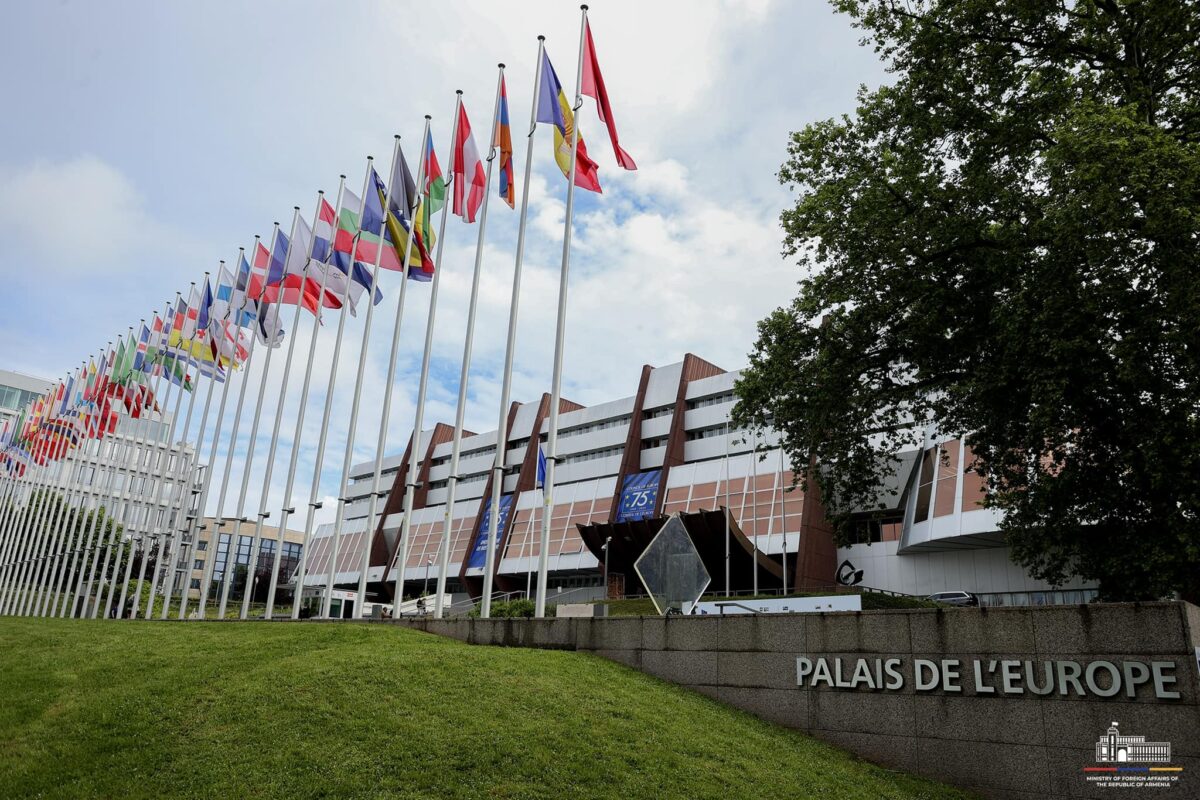
In the new report published today, the Council of Europe’s anti-money laundering body, MONEYVAL, commends efforts made in strengthening the understanding of money-laundering and terrorism-financing risks. The national policies and strategies to address these risks are satisfactory. The main money-laundering threats identified by the Armenian authorities stem from fraud, embezzlement, corruption, tax crimes, drug trafficking, and cybercrime. MONEYVAL calls for more in-depth analysis of foreign threats, terrorist financing and risks associated with virtual assets. It also considers that further improvements are needed in assessing risks in the real-estate sector, as well as in the operational cooperation mechanisms.
The legal framework for international cooperation is sound, and Armenia generally provides high-quality and timely assistance, demonstrating a proactive approach to seeking cooperation with foreign counterparts, particularly in corruption cases. However, this approach is not applied systematically to associated offences, such as drug trafficking. Mutual legal assistance is used, to some extent, for asset recovery efforts.
Checks on criminals in finance sector functioning
The report positively acknowledges the controls in place to prevent criminals and their associates from entering the regulated financial sector, as well as the financial supervisor’s understanding of money-laundering and terrorist-financing risks. Further steps are needed in the supervision of virtual asset service providers and non-public investments funds, which were recently regulated. The supervision of designated non-financial businesses and professions displayed limited effectiveness, with few sanctions and remedial actions applied, and these were not sufficiently dissuasive.
The Armenian authorities identified limited-liability companies, closed joint-stock companies, and, in some cases, non-profit organisations as the legal persons most frequently involved in criminal activities. A multi-pronged approach is used to obtain beneficial ownership information, but further steps are needed to ensure transparency, especially through the completion of the beneficial-ownership register and by verifying the accuracy and currency of the information it contains.
Financial intelligence and legal framework assessed
The report commends Armenia’s Financial Intelligence Unit for the progress made in expanding its human and IT resources, its broad access to data, and the quality of the intelligence provided to law enforcement authorities. Nevertheless, both the volume and quality of suspicious activity reports by the private sector should be improved. MONEYVAL also calls on the intelligence bodies to increase their focus on the money laundering aspects of criminal investigations.
Armenia’s legal and institutional framework has undergone reforms that have led to an increase in money laundering investigations and prosecutions, particularly in corruption-related cases. However, the system remains predominantly associated-offence-driven, with a focus on self-laundering linked to domestic offences. The restrictive interpretation of the money-laundering offence limits prosecutions, while the number of convictions remains low.
Questions over centrality of criminal-asset recovery
Despite significant efforts to establish a legal and institutional framework for asset recovery, the results achieved in seizure and confiscation of proceeds of crime do not demonstrate that criminal-asset recovery is pursued as a policy objective. While the introduction of the civil-forfeiture regime has strengthened the country’s ability to confiscate illicit assets, MONEYVAL calls for a comprehensive review of the asset recovery framework across all stages of the recovery process, together with enhanced expertise and resources for tracing, seizing and confiscating proceeds of crime. While there have been no prosecutions or convictions for terrorist financing, the legal and institutional framework is duly in place. Concerns remain regarding the consistent identification of terrorist-financing activities, particularly where funds are raised through associated criminality, with insufficient use of available information and underreporting of terrorist-financing suspicions by the private sector.
The report positively acknowledges Armenia’s robust framework and effective coordination mechanisms in implementing targeted financial sanctions related to terrorism and proliferation financing, as well as its risk-based oversight of non-profit organisations.
Following the assessment Armenia received a roadmap of key recommended actions to be completed within three years. Based on the effectiveness and technical compliance ratings received, Armenia has been placed in the enhanced follow-up process and is required to report back to MONEYVAL on the progress made.