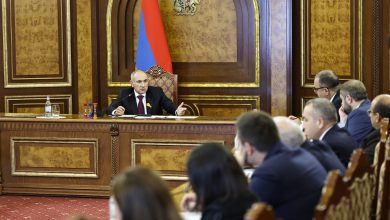



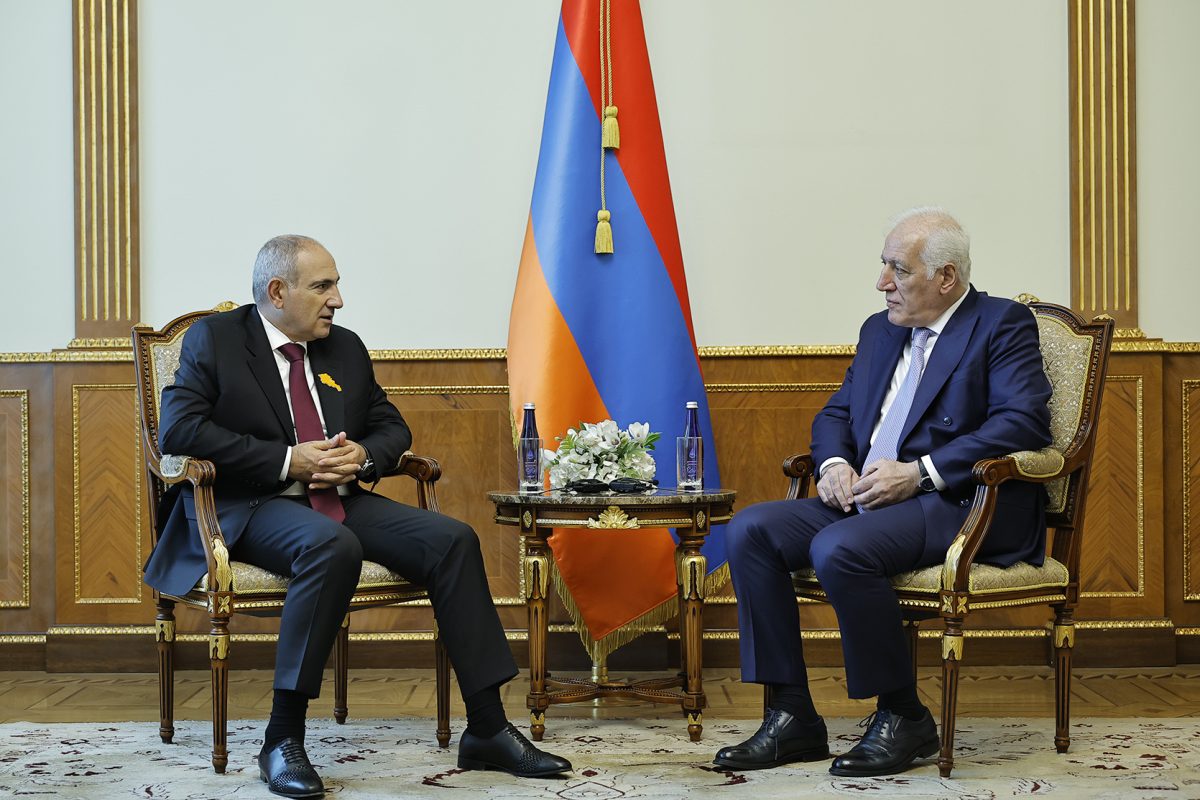
Prime Minister Nikol Pashinyan met with President Vahagn Khachaturyan to discuss the outcome of Armenia’s parliamentary elections, the country’s democratic development, and the priorities of the government to be formed following the vote.
President Khachaturyan congratulated the Armenian people on holding another nationwide democratic election, describing the 2026 parliamentary vote as an important milestone in the country’s political development.
He noted that the elections demonstrated the functioning of Armenia’s political and state institutions and thanked citizens for their active participation. Khachaturyan also congratulated Pashinyan and the ruling Civil Contract party on securing the confidence of voters and obtaining a parliamentary majority.
The president said the election reflected both an assessment of the government’s performance over the past five years and public expectations regarding the reforms and policies presented during the election campaign.
According to Khachaturyan, voters entrusted the new government with delivering a safer and more prosperous Armenia and implementing the promises made during the campaign.
He also stressed that the elections were held in a peaceful environment, saying Armenia had achieved peace and no longer had unresolved disputes with its neighbors that could lead to war. He expressed hope that the country would establish full diplomatic and good-neighborly relations with neighboring states.
Prime Minister Pashinyan thanked the president for his congratulations and said the Civil Contract party would form the next government after winning a parliamentary majority.
He described the election campaign as an important opportunity to engage directly with citizens and better understand public perceptions and concerns.
According to the prime minister, the election results showed that Armenians support the government’s peace agenda. He also cited investments in schools and kindergartens, capital infrastructure projects, and social reforms as factors that influenced voters’ decisions.
At the same time, Pashinyan acknowledged that the campaign exposed a number of public concerns, particularly regarding justice and the judicial system.
He said the elections had also revealed new challenges, including what he described as widespread vote-buying, which exposed vulnerabilities in the state system.
Pashinyan pledged to accelerate reforms, including anti-corruption efforts, institutional changes, and economic reforms, saying the government had received a sufficient mandate from citizens to continue that work.
“The elections clearly showed that democracy in the Republic of Armenia is irreversible,” he said, adding that while there had been attempts to undermine the people’s authority, those efforts had failed.
The prime minister also highlighted the need to further improve the electoral system and enhance transparency in the financing of political parties, media outlets, and organizations.
Looking ahead, Pashinyan reaffirmed the government’s economic objective of achieving average annual economic growth of 6 percent, saying he considered the target realistic given what he described as citizens’ willingness to work and improve their living standards.
He added that economic activity had already increased following the elections, interpreting it as a sign of renewed confidence. While acknowledging recent challenges in trade with the Eurasian Economic Union (EAEU), Pashinyan said such difficulties could also create new opportunities, including through a more balanced economic policy alongside Armenia’s balanced foreign policy.
The prime minister thanked President Khachaturyan for his support of the government’s work and said discussions on the composition and program of the new cabinet would follow in the near future.