


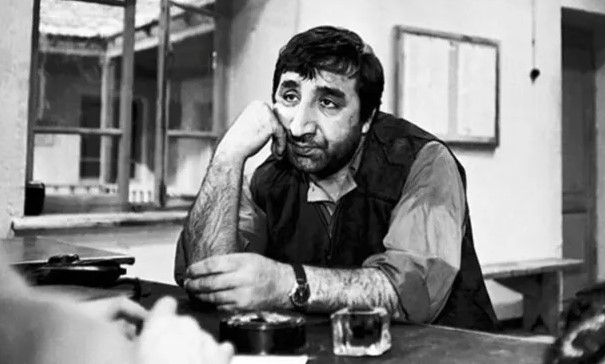
The Armenian film We and Our Mountains, will be on Klassiki streaming service from May 10, The Guardian reports.
The film was adapted by the Armenian writer Hrant Matevosyan from his own novel and directed by Henrik Malyan. “It’s an elegant, elusive parable of a movie about power and the state,” The Guardian writes.
“The deadpan coup de cinéma that opens the film is rather brilliant: a frenzied montage of all the exciting things that are happening in the 1960s – pop music, dancing, sports. But all of it is suddenly snuffed out with a hard cut to the silent rural world of the Armenian highlands where four shepherds are living the same tough existence as their forefathers: droll, dyspeptic Ishkhan (Frunzik Mkrtchyan), truculent Pavle (Khoren Abrahamyan), melancholy widower Avag (Azat Sherents) and university graduate Zaven (Armen Ayvazyan), whose habit it is to slaughter sheep while invoking the words of Shakespeare’s Othello: “… in Aleppo once, / Where a malignant and a turban’d Turk / Beat a Venetian and traduced the state, / I took by th’throat the circumcised dog / And smote him, thus”,” Peter Bradshaw writes in the review.
Bitterly cold and hungry one night, Ishkhan finds some stray and apparently ownerless sheep and slaughters them to provide a welcome barbecue for him and all his fellow shepherds shivering on the hillside. But then another shepherd, Revaz (Artavazd Peleshian), comes along, asking if anyone has seen his stray sheep. With a mixture of mockery, defiance and embarrassment, Ishkhan and the others tell the furious Revaz they have eaten his sheep and give him an inadequate amount in payment and Revaz furiously storms off.
The next day, an officious police inspector (Sos Sargsyan) is round at Ravez’s house and is bemused and infuriated at Ravez’s refusal to press charges. This policeman makes it his business to solve the crime and bring the wrongdoers to book: he will not tolerate this primitive world of chaotic hearsay among shepherds and will impose the rational technocratic might of the Soviet state – often grumpily breaking out in Russian as he does so. But he needs clear statements from all four, clear descriptions of the crime, clear confessions or clear witness statements.
However, it is quite impossible. The shepherds are evasive, garrulous and sarcastic and the inspector, like a colonial governor gradually going native, is less and less inclined to press the point.