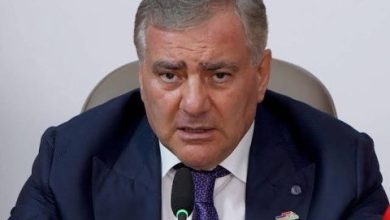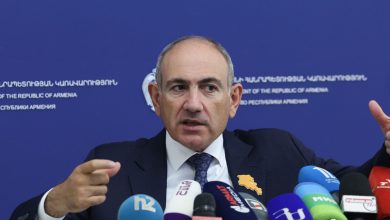



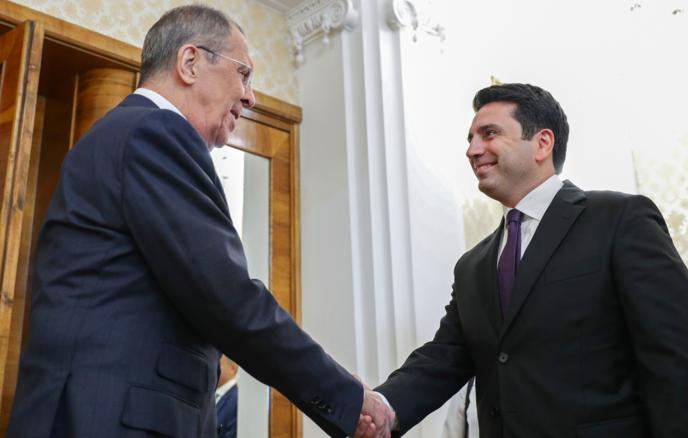
Russian Foreign Minister Sergey Lavrov and Armenian National Assembly Speaker Alen Simonyan held talks in Moscow focused on bilateral relations, regional developments in the South Caucasus, and Armenia’s foreign policy trajectory.
Lavrov said contacts between Moscow and Yerevan have been developing “steadily and intensively” over the past year, stressing that Russia views Armenia as an ally and strategic partner.
2020 agreements and regional connectivity
The Russian foreign minister emphasized the continued importance of the trilateral agreements reached in 2020 by the leaders of Russia, Armenia and Azerbaijan following the Nagorno-Karabakh war. In Moscow’s view, those arrangements remain key to resolving economic, transport and logistical issues across the region.
Lavrov said Armenia should benefit “significantly” from the implementation of these decisions, adding that all obstacles to the normal functioning of regional transport and economic links should be removed.
He also pointed to ongoing contacts between deputy prime ministers within the trilateral working group tasked with advancing connectivity projects.
EU engagement and geopolitical balancing
Lavrov touched on Armenia’s relations with external partners, particularly the European Union, saying Moscow does not oppose partners developing ties in different directions. However, he criticized what he described as EU efforts to frame cooperation as a binary geopolitical choice.
He warned against narratives that could “sow distrust and hostility” in public discourse and dismissed claims about alleged security threats to Armenia from northern actors or from the Collective Security Treaty Organization (CSTO).
At the same time, Lavrov reaffirmed Russia’s stated position that Armenia has a sovereign right to determine its foreign policy orientation.
“We are interested in Armenia being sovereign, strong and self-sufficient, and that it can choose its own external orientation,” he said.
Eurasian Economic Union vs EU
Lavrov addressed ongoing debates in Armenia about deepening integration within the Eurasian Economic Union (EAEU) versus moving closer to the European Union.
He argued that EAEU membership is institutionally incompatible with EU accession principles but stressed that the decision ultimately belongs to Armenia.
Highlighting economic ties, Lavrov said trade turnover within the EAEU framework had grown from about $10.5 billion in 2015 – when Armenia joined the bloc – to $26 billion today, calling Russia Armenia’s main trade and economic partner.
He added that Moscow is interested in expanding cooperation through major infrastructure projects and initiatives.
Humanitarian and cultural links
Lavrov also underscored humanitarian ties, including cooperation in culture, science, sports and the arts. He referenced a recently released film about Soviet-Armenian football legend Nikita Simonyan as a symbol of the historical and cultural bonds between the two peoples.
Simonyan: Armenia interested in strong ties with Russia
Speaker Alen Simonyan reaffirmed Armenia’s interest in maintaining close relations with Russia, saying there is no alternative understanding within Armenia regarding the importance of bilateral ties.
“At the same time, for obvious reasons, since the first days after the end of the war, we have been trying to settle the situation in our region,” he said.
Simonyan noted progress in Armenia’s negotiations with Azerbaijan and said Yerevan is approaching the signing of a peace treaty, which he described as crucial for the country’s future.
The Armenian speaker stressed that Yerevan’s regional diplomacy should not be interpreted as actions directed against Russia.
“I want to assure you that we will not go through such a situation of ‘with us or against us,’” Simonyan said, calling such a framing inappropriate for Armenia and harmful to existing partnerships.
CSTO concerns and public rhetoric
Simonyan reiterated that Armenia has unresolved questions regarding the CSTO, saying these concerns have been voiced repeatedly without satisfactory answers.
He also expressed concern over rhetoric coming from Moscow, saying such statements generate negative reactions within Armenian society despite Russia’s importance as an ally.
“It is very painful to hear such statements,” he said.
Integration processes
Addressing economic integration, Simonyan said Armenia does not believe it should leave the Eurasian Economic Union and expressed confidence that mutually beneficial solutions can be found through dialogue.