


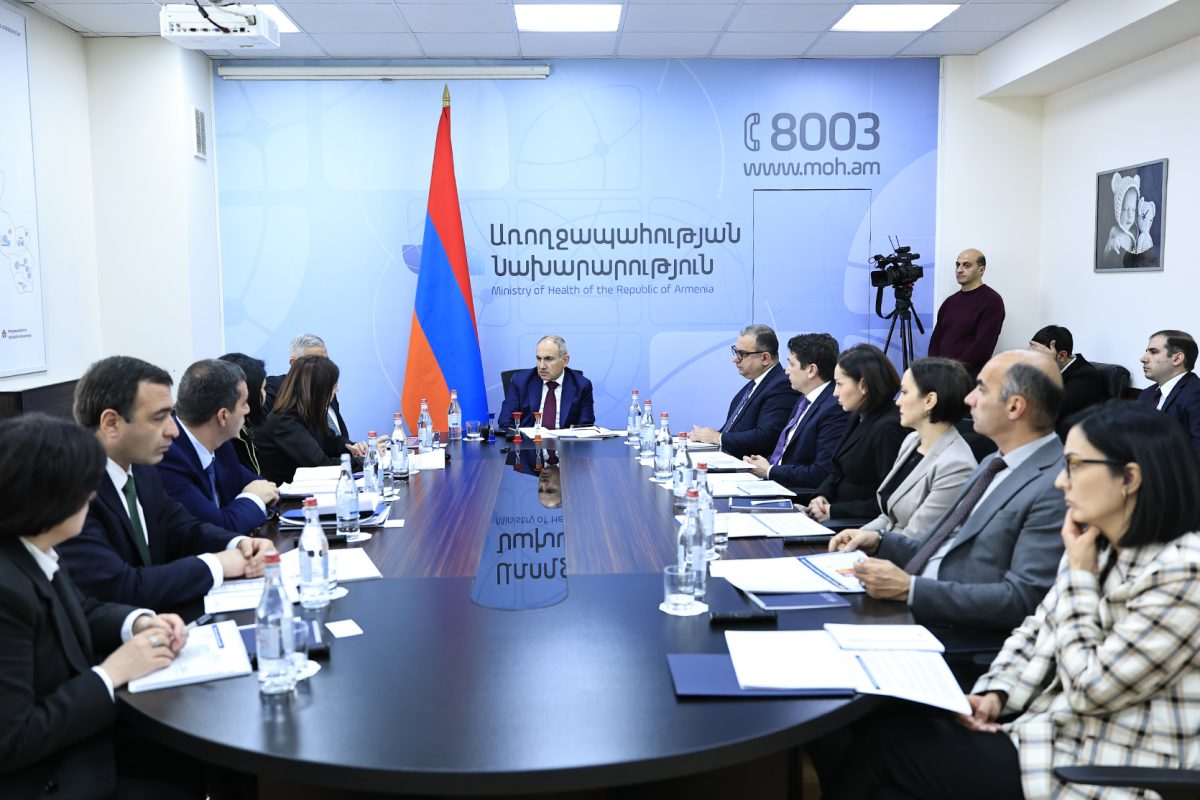
Prime Minister Nikol Pashinyan visited the Ministry of Health of Armenia to review the ministry’s 2025 performance report, with a strong focus on the rollout of the Universal Health Insurance system, sector-wide digitization, and expanded infrastructure investment.
Health Minister Anahit Avanesyan reported that the implementation of Universal Health Insurance began at the end of the year. In its first phase, coverage includes children under 18, citizens aged 65 and over, people with first- to third-degree disabilities, individuals with functional limitations, socially vulnerable groups and beneficiaries of social assistance programs—including families of fallen servicemen—as well as employees earning AMD 200,001 and above per month. In the first days of the year, 771 citizens had already used services under the insurance scheme.
Officials noted that all targets set for 2025 have been fully met: the system is fully operational, secondary legislation has been adopted, and registries of services, medicines, and eligible beneficiaries have been approved.
Prime Minister Pashinyan underscored the importance of eliminating cash payments in healthcare. He stressed that non-cash transactions are a cornerstone of an effective insurance system, ensuring transparency, traceability of patient care, and proper state oversight. Any services delivered without the state’s visibility, he warned, risk distorting the entire system. Pashinyan called for strict enforcement measures and sanctions against medical institutions that fail to comply.
The meeting also highlighted a substantial budget increase for the sector. In 2026, healthcare funding will rise to AMD 220 billion, up from AMD 164 billion in 2025—an increase of more than USD 100 million aimed at systemic reforms and improved service delivery.
Significant progress has been made in digitization. Birth registration is now fully digital and completed at maternity hospitals; immunization processes are entirely digital; and electronic prescriptions are widely used, with an average of 807,732 prescriptions issued and 720,217 dispensed in the last quarter. Digital sick-leave certificates are in place, and the digitization of laboratory services is ongoing.
Administratively, management authority over 42 regional healthcare institutions has been transferred to the Ministry of Health. Over the next three years, these facilities will be reorganized through mergers into single regional medical centers.
Infrastructure upgrades continue nationwide. Construction and renovation projects are underway at multiple facilities, including the Sisian Medical Center, the National Center for Mental Health, the National Center for Infectious Diseases, branches of the National Center for Disease Control and Prevention, and medical centers in Etchmiadzin, Masis, Ashtarak, Yegvard (Nairi Medical Center), Tashir, and Tsaghkahovit.
The government has launched individual physician licensing and introduced five-year licenses for medical organizations. Organ and tissue transplantation programs also continued, with 15 kidney and 55 bone marrow transplants performed by December 15.
Early disease detection remains a priority. Screening programs expanded for colorectal cancer, with 4,287 tests conducted among people aged 50–75 and 2,870 tests among those aged 45–70 in 2025, leading to six cancer detections. Breast cancer screening included 7,779 free mammography exams for women aged 45–68.
Maternal and child health initiatives continued with seven neonatal screenings for early detection of congenital and hereditary diseases. In 2025, adrenogenital screening expanded to 28,565 newborns, and an eye screening program for newborns was launched toward the end of the year.
Finally, the ministry reported that in 2025 the state centrally procured 95 medicines for 16 diseases, making them accessible to 238,964 beneficiaries.