


Nare Shirvanyan
Ani Sakanyan
Brusov State University
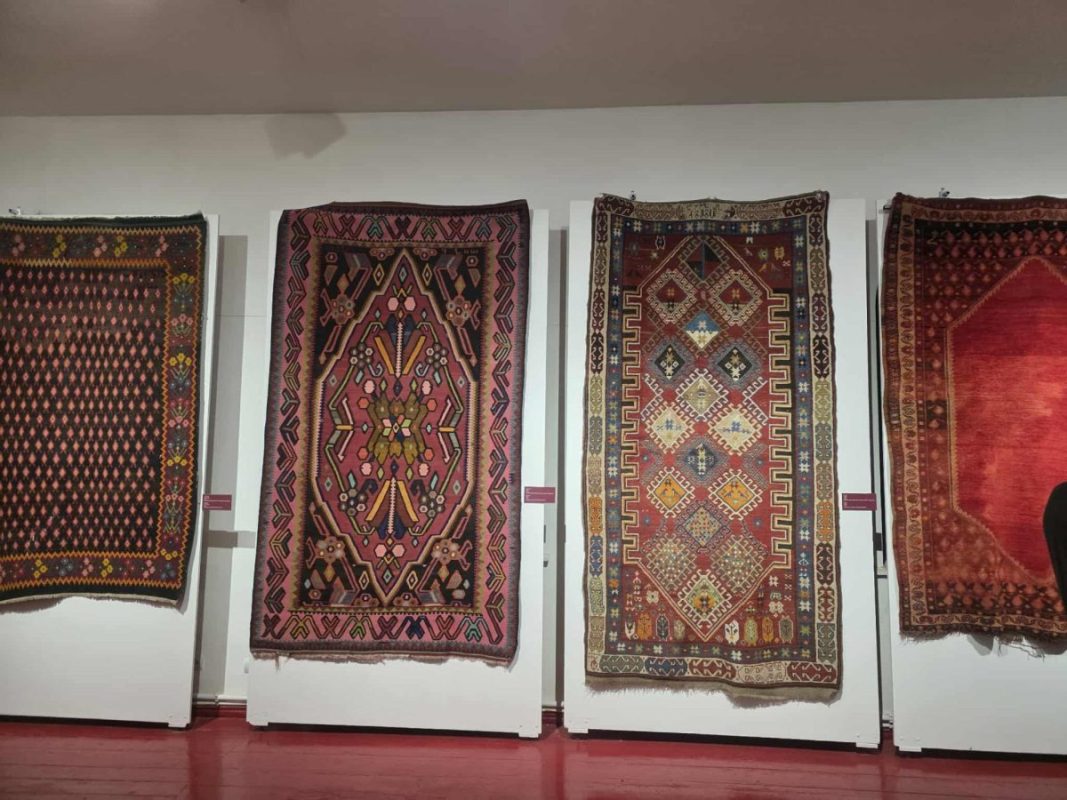
Unique examples of Armenian carpets and rugs from the late 19th and early 20th centuries are on display at an exhibition at the Sergey Merkurov House-Museum in Gyumri.
This remarkable initiative is the result of the joint efforts of the Museums of Folk Architecture and Urban Life of Gyumri, the Shirak Museum of Local Lore, and the “Kumayri” Historical and Cultural Reserve-Museum.
For the first time, 16 carpets and rugs with a total insurance value of about 30 million drams have been taken out of the museum collections for exhibition. These carpets once constituted one of the most essential and indispensable elements of furnishing in Armenian homes. According to Ani Nazaryan, Director of the Museum of Folk Architecture and Urban Life of Gyumri, there was a special attitude toward carpets and the art of carpet weaving in Alekpol, a cultural city whose traditions came from the provinces of Western Armenia.
“Every family in Alexandrapol had carpets and rugs. It is hard to imagine a family that would not not have at least one carpet. Carpets were part of their everyday life, and made the house look beautiful. As we know, they were also used as wall decorations. The interiors of virtually every Alexandropol home were decorated with carpets and rugs, while learning and preserving these traditions was seen as a way to pass them on to future generations.”
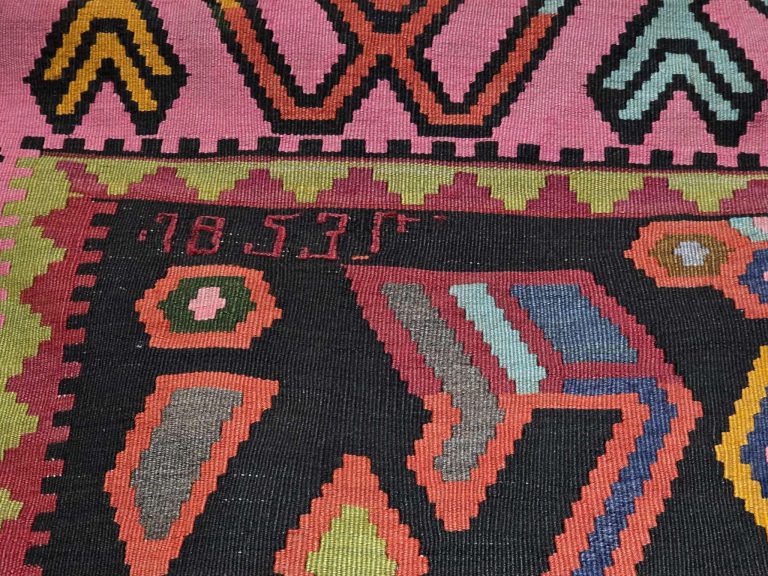
The first carpet-weaving workshop in Alexandrapol, opened in 1907, which contributed to the development and refinement of the craft in the region. Armenian carpets have always been recognized worldwide, distinguished by their unique ornamental patterns and the vivid, harmonious colors characteristic solely of Armenian carpet weaving, notes Ani Nazaryan.
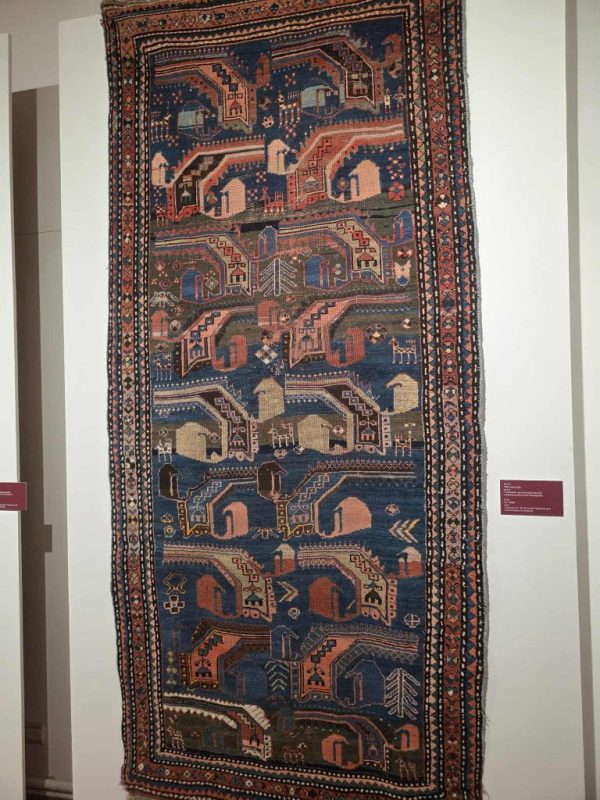
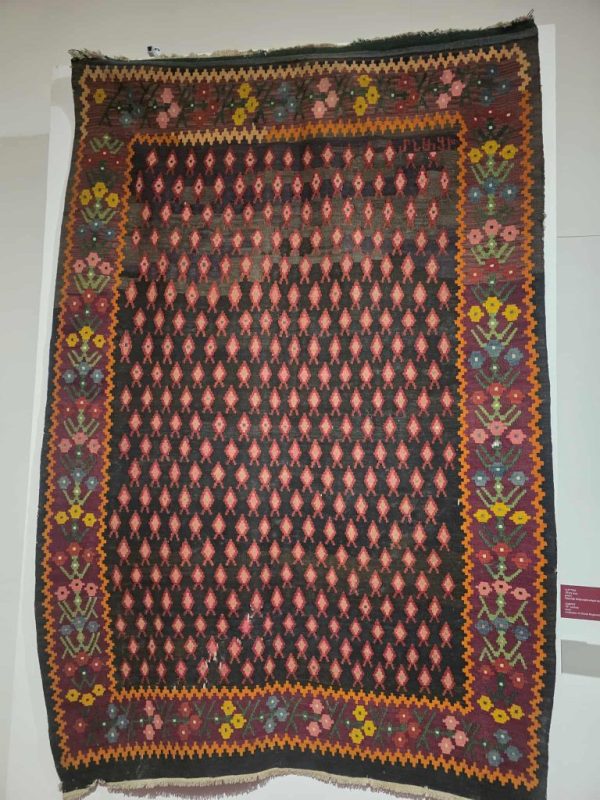
“Plant designs and geometric patterns are mainly used in carpet decorations. Very often, we can also see images of the zodiac and human figures. Our carpets also display dates and regions. They are unique in their colors as well. For example, “Vordan karmir”( red), which was widely used in our carpets, as well as blue and orange, are the main colors traditionally used in Armenian carpets.”
The exhibition of Armenian carpets and rugs at the Museum of Folk Architecture and Urban Life of Gyumri features uniques pieces from the collections of the Shirak Museum of Local Lore and the “Kumayri” Historical and Cultural Reserve-Museum. These examples differ in their structure and weaving characteristics from Armenian carpets created in the 1800s.
According to Inga Avagyan, Director of “Kumayri,” these pieces highlight motifs characteristic of Armenian culture – motifs that are scarcely repeated in other regions.
“Here, there are both rugs and carpets that stand out for their uniqueness. There is a “Beghavor” rug from the Shirak Regional Museum, and a carpet from the 1800s with very interesting decorative motifs. The “Vahan” rugs are also unique; they are hung side by side on the walls. These include pieces from Kumayri and the Shirak Regional Museum, typical of Basen-Bagrevand carpet making.”
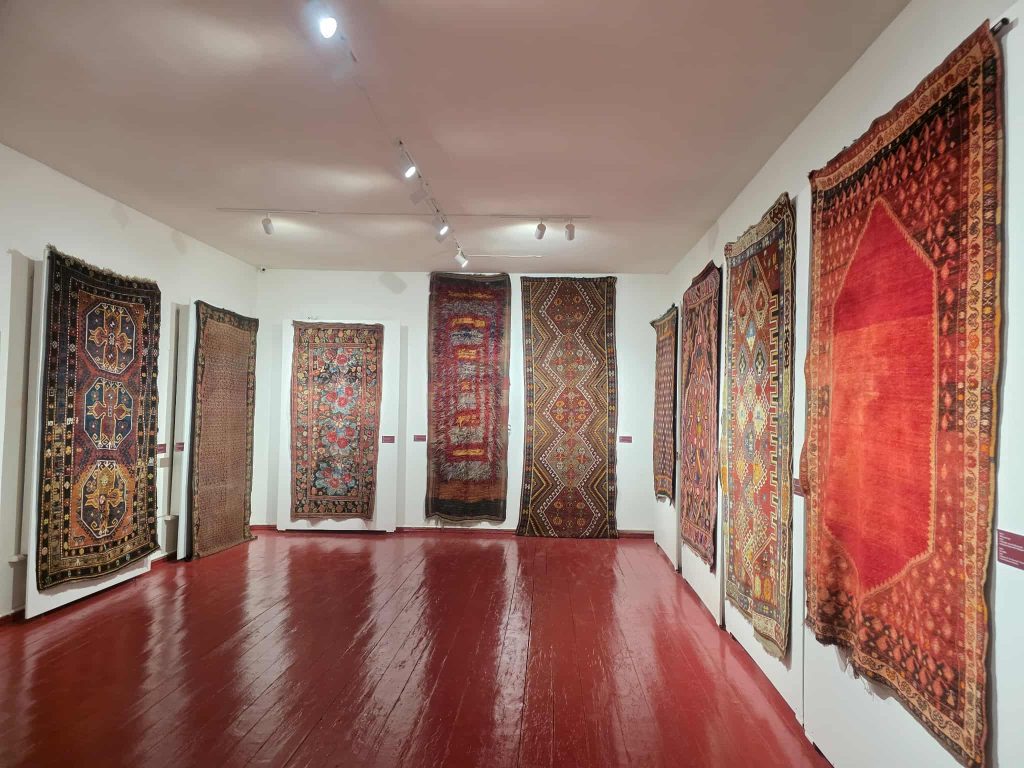
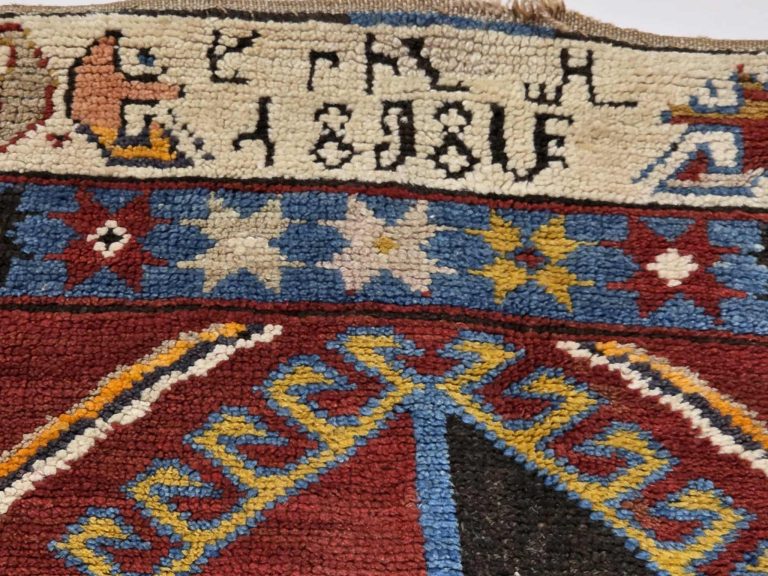
Each region of the Armenian Highlands had its own distinctive carpet-weaving style. Particularly remarkable are the carpets created in areas populated by refugees, where one can often find inscriptions and names woven into the fabric. According to Meruzhan Minasyan, Director of the Museum of Folk Architecture and Urban Life of Gyumri, one example stands out in particular.
“One rug stands out; it is called the “Beghavor” rug. It is special because there are only one or two examples of it in Armenia, and one of them is in the Shirak Museum of Local Lore.”
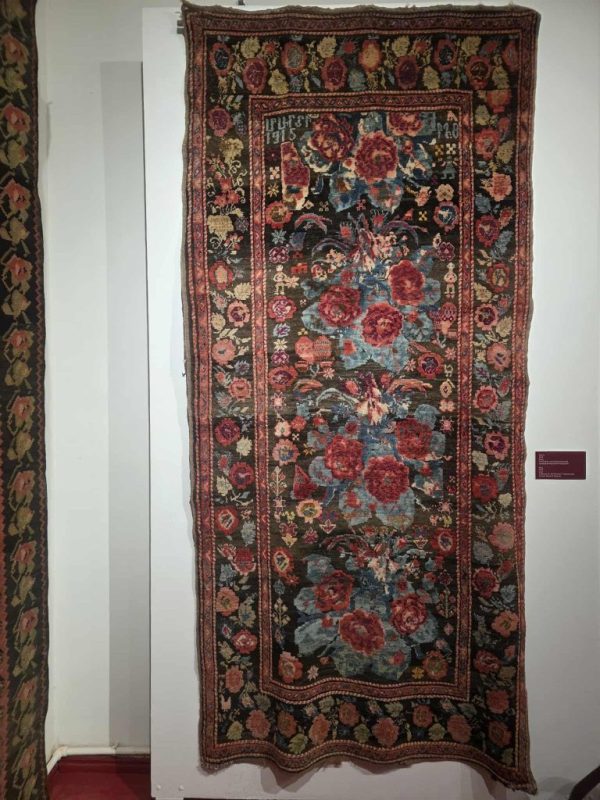
In addition to traditional motifs and geometric patterns reflecting national culture, Armenian carpet weavers sometimes expressed their emotions or recorded certain events in their work, often in symbolic form. One of the pieces presented at the exhibition is the “Carpet with Roses,” woven in 1915, in which the author expressed her pain and losses experienced during the Armenian Genocide, notes Inga Avagyan, Director of the Kumayri Historical and Cultural Reserve-Museum.
“It has the inscription “Mard 1915,” and the flower bouquets are upside down. This is probably connected to the 1915 genocide, and the weaver expressed the tragedy through the downward-pointing flower bouquets.”
The silent witnesses of Armenian identity and culture are preserved with exceptional care in the museums of Gyumri. At times, they are restored – specialists repair the damaged sections. The carpets, rugs, and saddlebags of the Shirak Museum of Local Lore in particular do not have a permanent exhibition space; for more than three decades they have been kept in storage rooms and wooden chests. The temporary small building allocated to the museum lacks even the minimum conditions necessary to preserve more than 2,000 artifacts, and the issue of obtaining its own building and exhibition hall remains unresolved.