


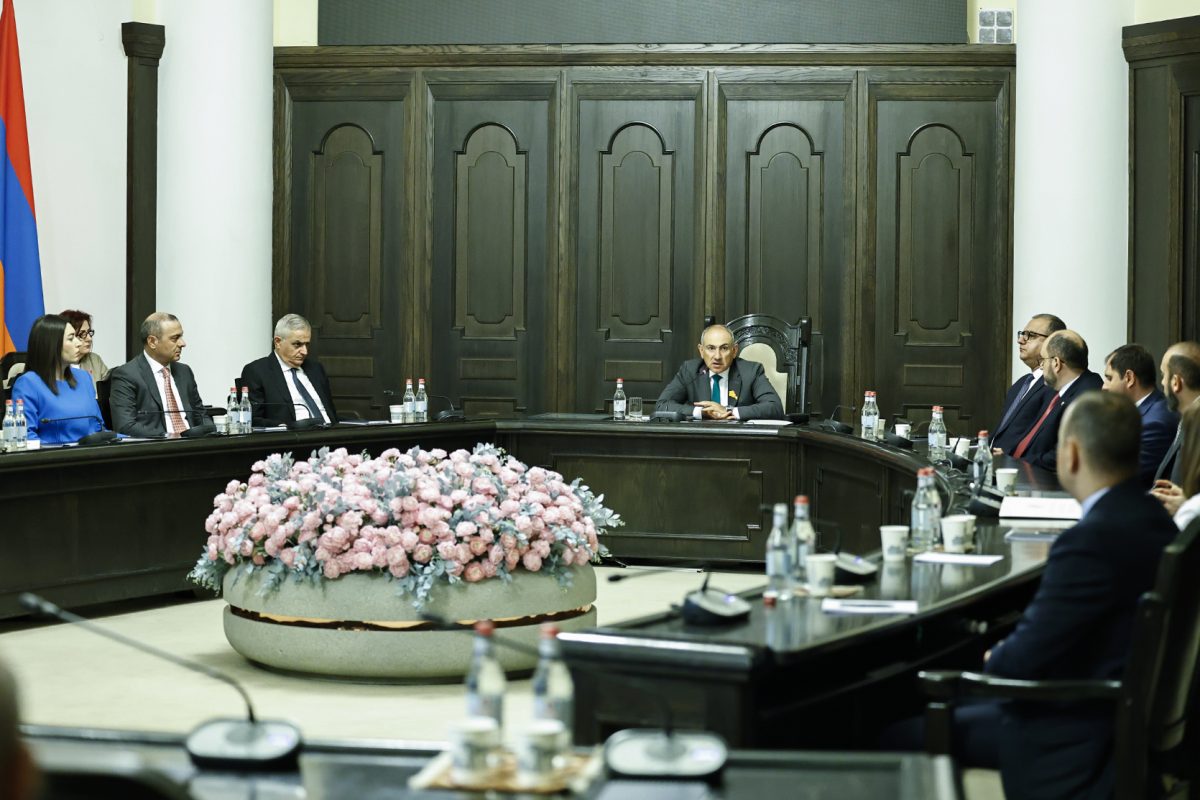
Armenian Prime Minister Nikol Pashinyan chaired a government meeting with members of the executive branch, thanking officials for ensuring the smooth operation of state institutions during his absence and for their role in organizing the country’s recent parliamentary elections.
Pashinyan praised state and local government bodies for helping ensure the successful conduct of the June 7 elections and expressed appreciation to law enforcement agencies for their efforts to combat vote-buying and unlawful pressure on voters.
According to the prime minister, the fight against electoral violations demonstrates the effectiveness of institutional and legislative reforms implemented in recent years.
At the same time, Pashinyan voiced concern about what he described as an insufficiently strong public intolerance toward vote-buying practices. He stressed that new mechanisms should be developed to foster a culture that rejects electoral bribery, describing the issue as one of national and democratic security.
“The state, our people, their free will, and the opportunity to express that free will must be the primary object of our care,” he said.
Turning to the government’s agenda, Pashinyan said ministries should actively continue their work, summarize progress achieved in recent years, and plan future activities until the formation of the new parliament.
He emphasized the importance of maintaining momentum in major infrastructure and social programs, including road construction and the “300 Schools, 500 Kindergartens” initiative. The prime minister highlighted the need to fulfill commitments made to children through investments in schools, sports facilities, arts schools, and playgrounds.
Among upcoming priorities, Pashinyan singled out the implementation of the TRIPP project, stating that Armenia should move quickly to complete the ratification process of the agreement signed with the United States.
The prime minister also referred to a number of infrastructure projects, including the restoration and design of the Akhurik-Gyumri railway section, reservoir construction initiatives, renovation of the railway station in Yeraskh, continued construction of the North-South highway, and the planned construction of the Kajaran Tunnel. He added that the Bargushat Tunnel project is expected to follow, based on agreements reached with French partners.
Pashinyan expressed confidence in Armenia’s financial capacity to carry out these projects, predicting increased investment activity in the country.
“The TRIPP project is a multi-billion-dollar initiative that will attract additional billions in investment. Our experience shows that money is not the main issue; the key issue is having a clear vision of what we want to achieve,” he said.
The prime minister also announced plans to identify three priority issues for every settlement in Armenia. He said local administrative leaders should discuss these priorities with residents, adding that he intends to hold working consultations in all regions of the country over the summer with the participation of government officials, governors, and community leaders.
According to Pashinyan, nearly all communities have submitted as many subsidy-supported development projects this year as they implemented over the previous eight years combined.
The prime minister once again highlighted the importance of citizens requesting fiscal receipts for purchases, arguing that public understanding of tax collection and state spending is essential for financing public services and infrastructure.
Pashinyan also discussed efforts to improve the business environment and reform the microbusiness sector. While supporting preferential conditions for small businesses, he stressed the need to prevent abuse of tax and regulatory benefits.
Among the government’s long-term priorities, he identified reform of Armenia’s water sector and closer cooperation with Veolia Jur company on investment planning. He also referred to the introduction of a new solid waste management system, the country’s energy transition agenda, and measures aimed at improving state budget revenue collection.
Concluding the meeting, Pashinyan issued a number of instructions to officials and emphasized the need to develop detailed action plans and clear implementation deadlines across all sectors.